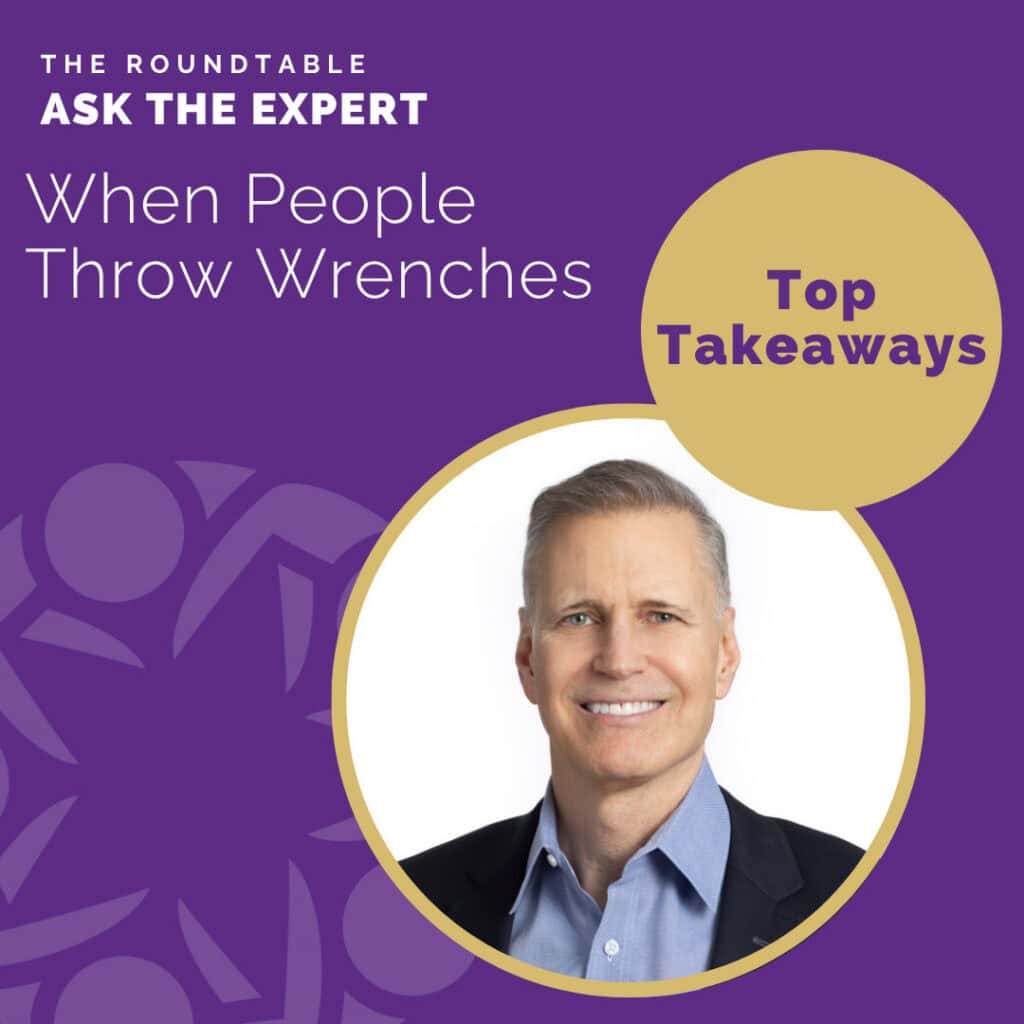
What a treat it was to talk to Phil Buckley, change expert and author of the soon-to-be-released book When People Throw Wrenches: Navigating the Emotions, Politics, and Power Plays of High-Stakes Change. We had a straight-talking conversation on the REAL reason why change efforts fail. Spoiler: it’s not the strategy or the project plan, it’s people. This engaging conversation covered a lot of ground that doesn’t typically get talked about when we talk about change management. Here are three of our top takeaways:
1. Self-Interest Isn’t a Character Flaw, It’s a Change Constant
The moment change is announced, everyone runs the same silent calculation: What do I gain? What do I lose? When losses outweigh gains, emotions follow like anxiety, anger, and at its worst, contempt: “I’m going to make this fail.” If you have 100 people going through a change, you have 100 unwritten personal change plans running underneath the official one. And it’s those individual agenda’s that will throw off any well-designed change initiative. Ignore them at your peril.
2. The Wrenches You Don’t See Are the Most Dangerous
When people throw wrenches into your change plans, it’s not the pushbacks that get verbalized in the room that cause the most harm. The most damaging behaviours are the quietest. Three of Phil’s watchouts include: favour trading ; two people quietly agreeing to oppose a change together; information gatekeeping: manipulating data, controlling the narrative, or simply making up ‘alternative’ facts; and, using flattery to sabotage: someone seems on side until they intentionally tank a change so their preferred alternative wins. These behaviours don’t come with warning labels. You need to do the diagnostic work before you’re in the middle of it. Which leads to our last takeaway…
3. Front-End Setup is Your Greatest Leverage
One stat that stood out: 40% of sponsors in failed change initiatives didn’t even know what their role was. To protect confusion and unnecessary self-interested behaviours from derailing plans, run a pre-mortem. Map the influencers, surface concerns early, position them as business risks, and align leaders and decision-makers on accountability and decision-rights. When you build an environment where wrenches aren’t necessary, most people won’t need to throw them. And, the other key part of a pre-mortem is to understand your own biases and behaviours. Change leadership starts from within.
3 Actions to Start Today
- Know and recognize your own triggers and biases — Self-awareness is the foundation. You can’t manage what you won’t acknowledge in yourself first. If you’d like to understand more about the potential biases you may be unintentionally bringing into your current change mandates, we can help. Book a meeting with one of our executive coaches to learn more.
- Think more about others’ biases and triggers — People repeat their behaviours. When you understand what drives the people around you, you stop being caught off guard and start being strategic. We can help with that too! Ask us about our IDI Team tools.
- Invest in relationships — The leaders who navigate change best aren’t the most technically skilled. They’re the most trusted. Relationships built before the pressure hits are the ones that hold when it does.
You can’t control every wrench thrown into your change plans, but you have far more power over the conditions that create them if you build your pre-mortem first.
Thanks again to Phil Buckley for a fantastic session. You can watch the full conversation here and visit Phil’s website to access his links to all his books and practical change tools.
Next month we’ll be exploring how leadership transitions will trip up the most capable leaders when we discuss Stepping Up: How Leaders Actually Evolve. Join senior executive coach Colleen Jones and me as we share the 13, (yes thirteen!), behaviours that executives need to demonstrate plus real-deal stories from our forty-plus years of combined coaching experience. Register now and bring a friend. This will be a fun and lively conversation.