Here’s a paradox from this year’s research that I keep coming back to.
One of the traits that sets high potential leaders apart is a notably low deference to authority. They question, they push back, they say the thing in the meeting that others are thinking. It’s part of what makes them valuable.
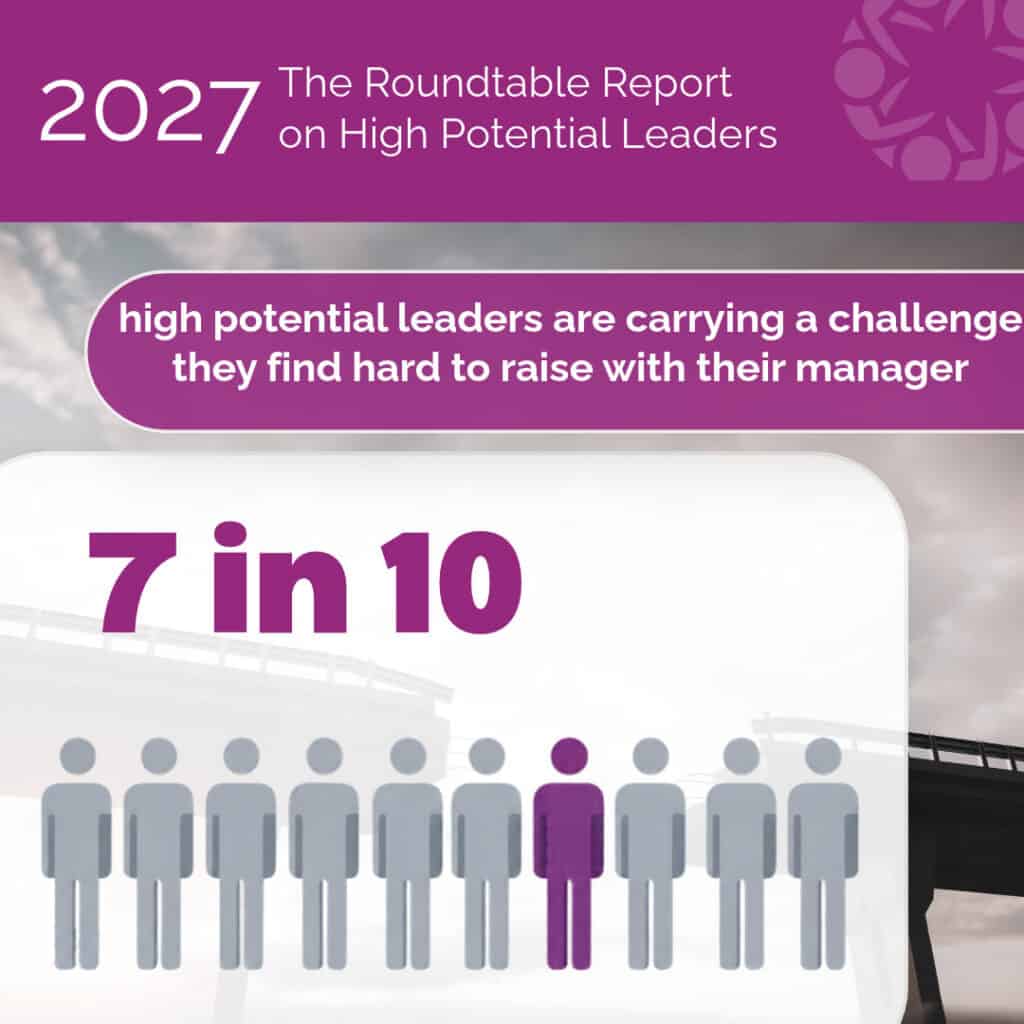
And yet roughly seven in ten of them are carrying at least one significant challenge they find difficult to raise with their own manager.
The leaders most willing to speak up about the business are often the least willing to speak up about themselves.
What goes unsaid
The topics they’re avoiding are not small ones. They are career trajectory, their manager’s effectiveness, unrealistic expectations, personal capacity and burnout.
In other words, the exact conversations the manager relationship exists to surface.
When we asked why, the answers were short and telling:
- On workload: “My reputation is at stake.”
- On career: “Never time to discuss.”
- On unrealistic expectations: “They seem intrinsic to our corporate culture.”
- On burnout: “Feels like a failure to a Gen Xer.”
None of these is passive. Each one is a judgment about what would happen if the truth were told. And each one, in its own way, is a reasonable judgment given what these leaders are seeing around them.
Identity makes it harder
High performers have a deep motivational wiring around delivering results. So admitting a capacity limit can feel like admitting failure, particularly in cultures where driving to outcomes gets rewarded.
One leader put it plainly: “My reputation is at stake. Saying ‘just do what you can do’ is not sufficient for a dedicated high performer.”
That sentence should give every HR leader pause. Even the permission to scale back is being heard as a trap.
What changed from last year
In 2026, leaders told us they wanted more clarity and more feedback. In 2027 the issue has shifted. The silence itself is now the problem.
Leaders are managing perceptions carefully. They worry about being seen as negative, uncommitted or unable to cope. Meanwhile, many of their managers are stretched so thin they don’t have the room to create the safety these conversations need. It’s a cycle that feeds itself.
Why this should worry you
You lose the signal before you lose the person. High potentials don’t quit suddenly. They recalibrate quietly first. By the time a leader tells you they’re looking elsewhere, they’ve usually already adjusted their commitment. These unspoken conversations are your earliest warning system, and right now it’s switched off.
You lose your best intelligence. High potentials see around corners. They spot problems before they cascade and understand operational realities that executives can miss. When they stop sharing what’s hard for them, they often stop sharing what’s hard for the business too.
Politeness gets mistaken for health. One respondent described their culture this way: “We tend to be overly nice and positive to the extent that we’re not always honest with ourselves or each other about where things aren’t working.” A calm surface can mean things are fine. It can also mean people have stopped saying otherwise.
It isn’t hostility. It’s invisibility.
When we look at the leaders who are thriving, the manager relationship is almost always the difference. It shows up as developmental feedback, visible advocacy and career conversations initiated without being asked.
What defines the absence of that manager isn’t conflict or bad intent. It’s invisibility. Nobody is shutting these conversations down. Nobody is opening them up either.
This is what drift looks like from the inside. A committed leader, still delivering, quietly deciding that some things aren’t worth saying out loud.
A question to sit with this week
Think of a high potential leader you know well. What’s one thing you suspect they’re carrying that they haven’t said? And who in their working life would they say it to?
Next week, we’ll look at the single conversation that changes this picture most, and the striking difference it makes when it happens.
Download this year’s The Roundtable Report on High Potential Leaders for the full findings.